
Discovering the Roots of Hopping John: A Festive Feast for the New Year
Richard - The Southern Kitchen
Jan 8, 2024
3 min read
Dear Foodie Friends,
Hope your festive season was fabulous and 2023 ended on a successful note! Our 2023 was an exhilarating whirlwind - from Christmas catering parties like a Wild West-themed 'Hoe-Down' and an epic launch party for Exobourne, a new American post-apocalyptic MMO game, to our involvement in local school fairs across Tooting and Balham.
In 2024, we’re gearing up for more, starting with a sporting pop-up at Belleville Taproom for the Six Nations in February and March. Stay tuned for all the exciting details!
Amidst the festive buzz, at ours, food took the spotlight, with Christmas eve dinner featuring hot-smoked salmon with buttered boiled potatoes, veggies, and a tantalising green goddess sauce - a deliciously divine, guilt-free prelude to indulgence. The main event? A treat from The Ginger Pig: a 5-bone Côte de boeuf and no cooking by me required!
Christmas Eve dinner Christmas Eve dinner Christmas Eve dinner
And then there was New Year's Day - a time for special meals. Enter Hoppin’ John, a dish symbolising peace, prosperity, and good luck for the year ahead. Rice, peas, greens, and pork come together, each representing a facet of fortune. The peas, represent coins. The greens, represent the mighty greenback. And pork, optimism because pigs forage forwards and not backwards. Counting peas equals counting blessings, and a hidden coin heightens the luck!
Folklore surrounds the origin of this cherished New Year's dish, as diverse as its flavours. Recipes for this culinary delight, trace their roots to the coastal Carolinas, where enslaved people savoured dishes made of rice, peas, and pork. Renowned food historian Karen Hess categorises it as a "bean pilau of the African diaspora." Plantation owners sought a profitable crop for the region's challenging climate but fertile delta wetlands, eventually embracing rice cultivation, thus coupled with the widespread growing of cowpeas, Hoppin’ John infiltrated various echelons of society, becoming a beloved dish.
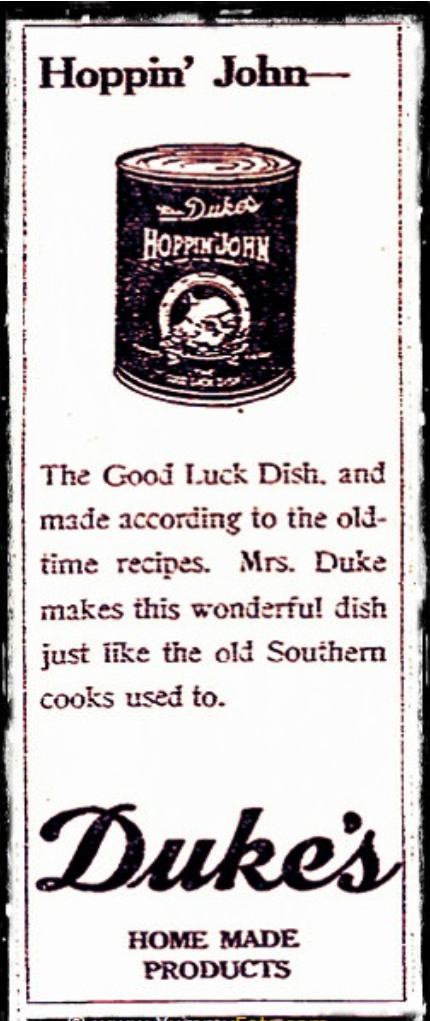
Its rise to prominence during the depression era stemmed from its simplistic yet richly flavoured composition. The dish's essence lay in the providence of its ingredients, relying on heritage varieties for its wholesome taste. However, as industrialisation swept through farming, mechanisation led to the loss of heirloom grains and breeds. The Carolinas’ marshy rice fields succumbed to the weight of heavy machines, traditional flavoursome red peas being scarce outside their native region. Consequently, black-eyed peas became the standard, and pigs underwent breeding practices favouring factory-raised standards that resulted in leaner meat compared to the hearty breeds characterised by meat almost purple in its rich hue, accompanied by thick layers of fat.
Despite modern challenges in sourcing authentic ingredients, recent strides, notably by Anson Mills with their Carolina Gold Rice & Sea Island Red Peas, have reintroduced heritage breeds and grains. Yet, the evolution of this dish through the 20th century introduced various embellishments, catering to modern taste buds with diverse cooking techniques, additional ingredients, and spices. Even in South London, while authentic ingredients may be elusive, our version of Hoppin’ John on New Year's Day retains its delicious essence, with hopes of bringing abundant luck and fortune!
Slow cooked peas & greens A spoonful of goodness A plate of Hoppin' John


Comments